
Assume the Best
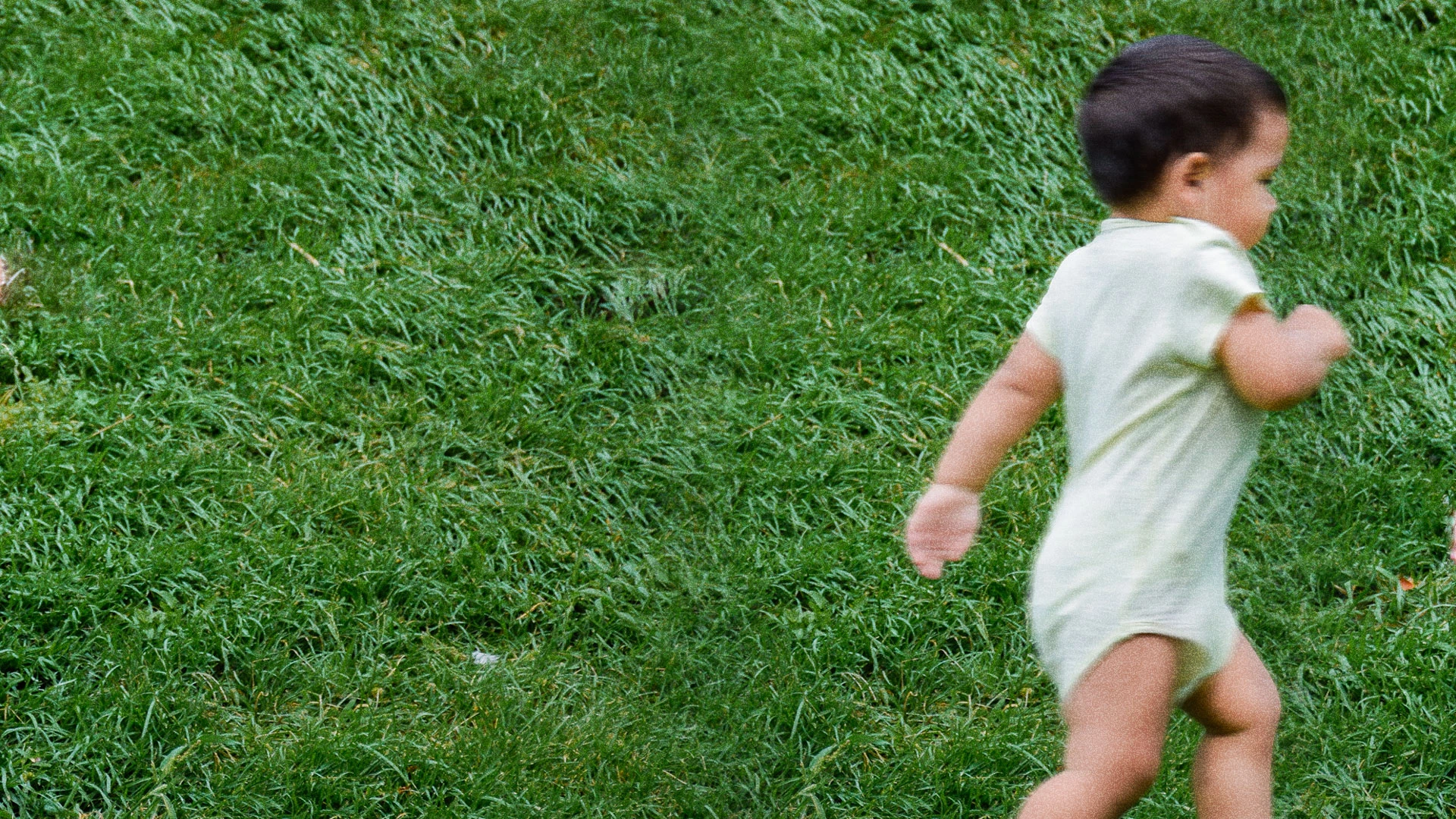
Two-year-old Ben tore down our street, cackling wildly. His mother, less pleased with her son's freedom, ambled behind him calling, "Ben, stop!" As her repeated and ineffective cries of "Ben, stop!" crescendoed, her walking speed did not. My husband realized mom wasn't going to catch Ben and started running after him in his trip-hazard sport slides.
Meanwhile, I'm taking in the scene with a less-than-kind internal monologue: "Really, mom? Not even going to chase him? Obviously he is not listening to you, and now it's my husband's responsibility to make sure Ben gets home?"
GREAT attitude, I know.
Jared did catch Ben and led him safely back to the sidewalk. Then, Ben's mom spoke the words that yanked the judgmental spirit right out of me: "Thank you for getting Ben. I just had surgery yesterday and it's impossible for me to run; I never would have caught him."
I. Am. The. Worst.
Have you ever been in my shoes? You're watching the scene unfold, huffing at people's ineptitudes, and then BAM! You're smacked by the humbling truth that your negative assumptions were completely off-base.
Truthfully, I love all our neighbors. We get each other's mail during vacations and exchange emergency eggs and sugar. Our family motto is "knock anytime, and if you see us outside, join us!" What happened to that love when I was watching Ben and his mom? How did it warp so quickly?
ASSUMPTION IS HUMAN
Everyone makes snap judgments—that's human nature, and it's often a helpful instinct when we must act before we can analyze. I might be wrong that the stray dog running at me is unfriendly, but I'm going to put some distance between us. Unfortunately, that same instinct gets us into the relational danger zone when negative assumptions interfere with our love for others.
When asked about the "greatest commandment," Jesus quoted two from Leviticus, and the second was "Love your neighbor as yourself" (Matthew 22:39). How can we assume in love?
LOVE HOPES
Paul defines in his first letter to the Corinthians what it means to "love your neighbor":
Love is patient and kind; love does not envy or boast; it is not arrogant or rude. It does not insist on its own way; it is not irritable or resentful; it does not rejoice at wrongdoing, but rejoices with the truth. Love bears all things, believes all things, hopes all things, endures all things.
(1 Corinthians 13:4-7, ESV)
If you skipped the passage because you've heard it at 45 weddings, read it with the Greek word "agape" in place of "love." "Agape" is the same word used for "love" in Jesus' command to "love your neighbor" in Matthew 22. Plus, 1 Corinthians 13:4–7 appears in the context of Paul instructing believers how to live as the body of Christ. Paul's definition of love isn't about romance—it's instruction for loving our neighbors.
Every statement in Paul's list influences how we make assumptions, but hone in on that last sentence: love bears, believes, hopes, and endures. Loving others God's way assumes the best.
THE SCIENCE OF ASSUMPTION
Mini social sciences lesson.
Fundamental attribution error (FAE) is a bias that underemphasizes situational factors and overemphasizes dispositional factors when observing a person's actions. In other words, my mistake was caused by a difficult situation; your mistake was caused by a personal flaw.
Let's say the bathroom in our house didn't get cleaned all week.
I have been busy all week caring for the kids, and I did twelve other chores, so missing one task is no big deal.
But my husband didn't clean it either, and that's probably because he's lazy and doesn't want to help out around the house.
How unfair is that dichotomy?! That's fundamental attribution error.
My example is exaggerated, but not by much. We readily acknowledge the circumstances behind our own failures while ignoring the circumstances that may have shaped someone else's. Is that love that bears, hopes, and believes?
WHAT'S AT STAKE?
What would happen if your default was to assume the best?
Seriously—what would happen?
Have you ever noticed that assuming the worst requires imagination? When someone's actions frustrate me, I invent a reason for them. "They're speeding through traffic because they're reckless and selfish."
What if I used that same imagination to consider a more gracious possibility?
"Wow, I wish they wouldn't drive so fast, but maybe they're rushing to the hospital."
Can you hear how that possibility immediately disarms the situation?
What's at stake if I'm wrong? Very little. The driver is still speeding, but I've extended the grace of believing there may be more to the story than I can see.
Now consider the opposite. What happens if I assume the worst and I'm wrong?
Believing the driver is selfish doesn't change his behavior. But my belief changes me. It adds another offense to my mental list. It fuels irritation, judgment, and resentment.
Negative assumptions leave you in a constant state of frustration, convinced that people are selfish and determined to make your life harder. When you assume the worst, friendships suffer as you begin interpreting mistakes as character flaws. With a spouse, repeated assumptions about bad motives sow seeds of resentment and bitterness—a recipe for strife.
Alternatively, assuming the best is one practical way we love our neighbors. It reflects the love Paul describes in Scripture—a love that bears, believes, hopes, and endures. Giving others the benefit of the doubt doesn't ignore wrongdoing; it simply resists jumping to conclusions. Instead, it seeks understanding, extends grace, and frees us from anger rooted in assumptions.
Love bears with a friend who's late to coffee because there may have been an accident on the route.
Love hopes that when a small group member transitions to a different group, it's for their good and for God's glory.
Love believes a spouse didn't clean the bathroom because he or she has been working hard elsewhere.
Love assumes the best.